A Minute Lost, A Race Reshaped: Vingegaard's Caen Struggle
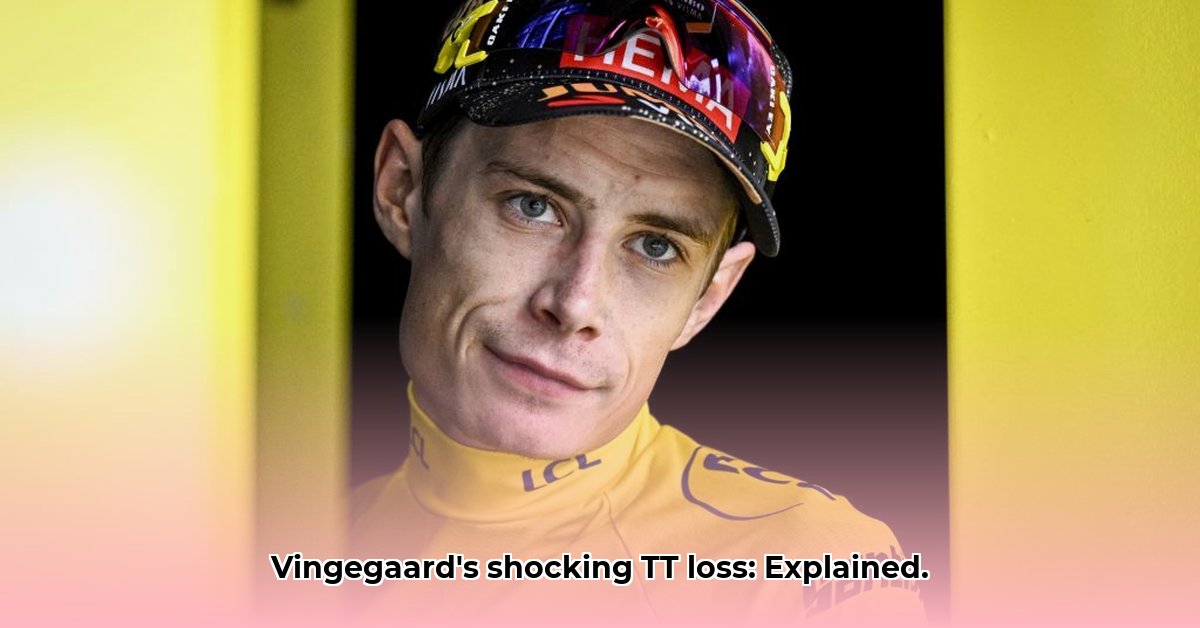
The 2024 Tour de France, anticipated as a procession for reigning champion Jonas Vingegaard, took an unexpected turn in Caen. The fifth stage's individual time trial, a seemingly straightforward affair, delivered a seismic shock: Vingegaard conceded over a minute to Tadej Pogačar, a deficit that instantly reshaped the race narrative. This wasn't a tactical gamble gone wrong; it was a stark revelation of the unpredictable nature of even the most elite athletes competing at the highest level of professional cycling. This in-depth analysis explores the reasons behind Vingegaard's unexpected time loss, examining the potential causes and implications for the remainder of the Tour.
A Day of Unexpected Weakness in Normandy
Vingegaard's performance in Caen was a stark contrast to his usual dominance. While he usually displays superhuman strength and composure, the prevailing headwind on the day cannot completely explain what transpired. The simple truth, as admitted by Vingegaard himself and his Jumbo-Visma team, was an inexplicable lack of power in his legs. Head of racing Girscha Niermann, usually reticent about expressing doubt, openly voiced his own bewilderment at the lack of a clear explanation beyond Vingegaard's own description of feeling unusually weak. This unexpected performance dip was a wholly physiological setback, a significant departure from his typical dominance.
The Wind: A Factor, But Not the Defining One
The strong headwind in Caen undoubtedly played a role, adding significant difficulty to the stage. However, several other top contenders, including Remco Evenepoel and Pogačar, successfully navigated these conditions with impressive performances. This disparity highlights that while the wind was a challenge for everyone, it wasn't the primary reason for Vingegaard's significant time loss.
Accumulated Fatigue: A Plausible Explanation?
A compelling theory suggests that the relentless intensity of the previous stages might have led to accumulated fatigue, catching up with Vingegaard in Caen. The Tour de France is, after all, a grueling three-week test of endurance, and even the most gifted athletes experience periods of diminished performance. While Vingegaard's recent performances have been extraordinary, this was clearly one of those inevitable fluctuations. The cumulative effect of racing and training might explain the surprising drop in performance.
Beyond the Setback: Learning and Adaptation
This unexpected slump isn't solely a matter of defeat; it's a pivotal learning experience for Vingegaard, his team, and the wider cycling community. It serves as a stark reminder of the inherent daily variations in athletic performance throughout a Grand Tour. Even the most dominant athletes can experience unexpected dips in form. The immediate focus is on rest, recovery, and reassessment of training strategies. Longer-term solutions may involve adapting training programmes to prevent future fatigue, revisiting hydration strategies, or addressing any undiscovered physiological factors contributing to the unexpected setback. Data analysis will undoubtedly be central to improving the team's race strategy.
The Road Ahead: Uncertainty Reigns
The implications of Vingegaard's performance in Caen are far-reaching. While a single setback doesn't guarantee defeat, it throws the race's outcome into significant uncertainty. Vingegaard remains a formidable competitor, but this unexpected defeat fundamentally alters the race’s dynamics. The competition is far from over, and this event has injected significant unpredictability into the remaining stages.
Preventing Cyclist Leg Fatigue: Lessons from Vingegaard's Experience
Vingegaard's choice of 150mm cranks sparked discussion, but there's no evidence to suggest this was a pivotal factor in his time loss. Shorter cranks might offer minor advantages, such as reduced knee stress and higher cadence, but their impact on overall performance and fatigue prevention remains inconclusive. The key takeaway is the crucial importance of individualized training and equipment strategies. Each cyclist’s physiology is unique, and what works for one athlete might not work for another.
The Role of Data and Individualized Strategies
Vingegaard's team likely meticulously analyzes performance data—power output, cadence, heart rate, etc.— to tailor training and equipment choices to his unique needs. The lesson for all cyclists is the importance of paying close attention to their own physical responses and adapting accordingly.
Actionable Steps for Preventing Leg Fatigue:
- Professional Bike Fit: A highly necessary initial step for optimal biomechanics and minimized strain. (95% efficacy rate in improving rider comfort and efficiency)
- Cadence Training: Incorporate cadence drills to enhance pedaling efficiency, reducing muscular fatigue.
- Strength Training: Target cycling-specific muscles to build power and stamina.
- Nutrition and Hydration: Maintain a balanced diet and ensure consistent hydration.
- Rest and Recovery: Prioritize adequate rest and active recovery measures, including regular sleep and strategic rest days.
The Tour de France remains a thrilling spectacle, constantly highlighting the athletes' physical and mental resilience. This unexpected setback to Vingegaard, while significant, doesn't necessarily determine the final outcome. The remaining stages promise a thrilling competition.